Context

01 · Knowledge Sharing
Creating a designer onboarding guide
When I joined, there was no formal onboarding guide for designers, so much of the setup and team knowledge had to be learned along the way. I took the initiative to turn what I learned the hard way into a practical starting point for new designers, covering tools, test accounts, key resources, team contacts, Figma setup, and common design processes.

Creating shared language guidelines
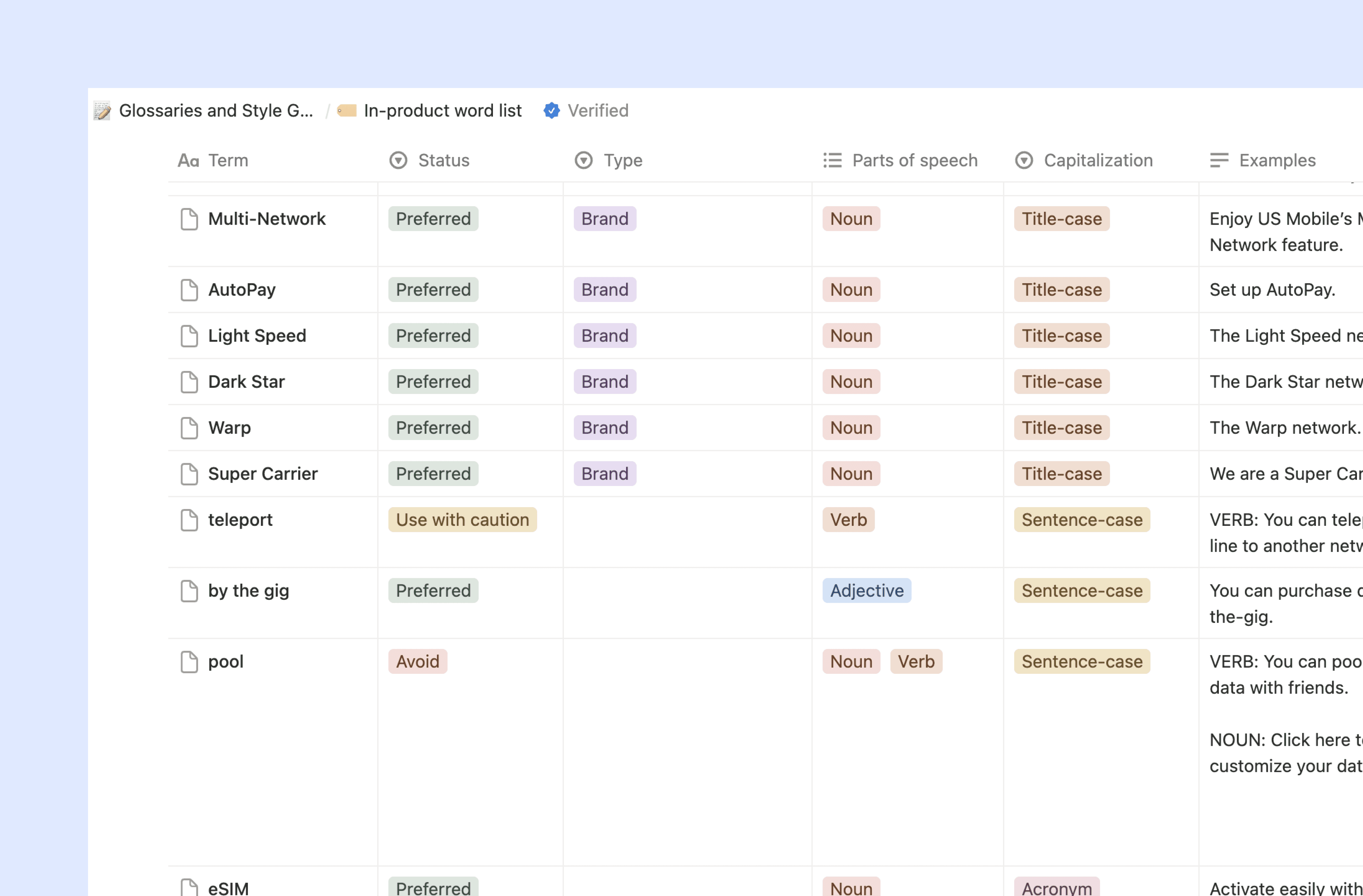
Product terminology and writing conventions often came up during design work, but the answers were not always easy to find. I surfaced the recurring gaps and partnered with our content writer to create a shared reference for terminology, naming, date formats, CTA conventions, and other common writing decisions. The content team became the main owner, while I continued contributing questions and gaps I noticed through product work.
02 · Design Operations
Facilitating design retrospectives
As the design team grew, I was asked to facilitate monthly retrospectives where designers could reflect on what was working, surface challenges, and discuss ways to improve together. I helped structure the sessions, keep the conversation moving, and create space for the team to share openly.

Organizing the Figma workspace
As more designers and projects were added, our Figma workspace became harder to navigate. I helped reorganize files around key product areas, introduced clearer naming and thumbnail conventions, and added visual cues for different types of work and ownership. This made it easier for the team to find the right files and understand how work was organized.

Contributing to shared design foundations
I also contributed reusable components and visual conventions to our evolving design system, including icon keylines, inputs, buttons, and dropdowns. For the icon system, I introduced keyline guides to improve optical consistency across different shapes and sizes, giving designers a more reliable foundation to build from.

03 · Reusable Systems
Creating email templates
Emails were often designed from scratch by different designers, which made the experience inconsistent and added repeated work. I took the initiative to review and categorize our most common email types, then created reusable Auto Layout templates in Figma. This gave designers a shared starting point and helped keep future emails more consistent without rebuilding each one from scratch.
